
Capture each observation with location, evidence, responsibility and next action while the context is still fresh.
Inspection notes create extra work when they describe what was seen but not what should happen next. The manager returns to the office with photographs in one place, shorthand in another and several details held only in memory. A disciplined capture structure turns the site visit into an action-ready record while the context is fresh—and gives colleagues, contractors, tenants and owners a dependable account of what happens next.
Capture four fields, not a stream of notes
For every material observation, record the minimum information another person needs to understand and progress it. Begin with the precise property, building, floor and location. Add a factual description of what can be seen, supported by a clear image that establishes both context and detail. Then record the required action, priority, responsible person and target date.
Separate observation from interpretation. ‘Water staining approximately 300 mm wide beneath the eastern ceiling joint’ is a useful fact; ‘roof has failed’ may be an unverified conclusion. Accurate language helps the next person assess urgency without overstating certainty. If an immediate risk exists, record the temporary control—such as isolating an area or arranging urgent attendance—alongside the longer-term action.
- 01
Exact property and location
- 02
Observation and supporting image
- 03
Required action and priority
- 04
Owner, target date and follow-up status
Triage before leaving the property
Separate urgent safety or damage issues from planned maintenance and general observations. A useful triage test considers consequence, likelihood and time sensitivity: could the issue harm a person, interrupt a tenant, damage the building or become materially more expensive if no action is taken today?
Confirm which items require tenant, contractor or owner communication, then assign the first action immediately. Where access, specialist advice or owner approval is needed, state that dependency. ‘Manager to obtain roofing assessment by Friday’ is clearer than ‘investigate’. The purpose is not to diagnose every fault on site; it is to make the first safe, proportionate and accountable decision.
Create evidence another person can understand
Photographs are most useful when they answer where, what and how much. Take one contextual image showing the observation within the space, then a closer image showing the condition itself. Use a consistent naming convention or attach the images directly to the relevant record so they cannot become separated from the property and date.
Record who was present and any material explanation offered during the visit, but distinguish that explanation from verified fact. If a tenant says the issue began after recent works, preserve the statement as context and confirm it through the appropriate records. This protects the relationship: people can see that their information was captured without the team treating an untested account as a final finding.
Turn the record into a useful conversation
Different audiences need different views of the same issue. A contractor needs location, access and technical context. A tenant needs acknowledgement, safety guidance and a realistic update. An owner needs to understand consequence, cost exposure, responsibility and any decision required. The underlying record should remain consistent even when the message is tailored.
Write the first update before the details scatter. A strong message states what was observed, what immediate action has been taken, who owns the next step and when another update will be provided. Where timing is uncertain, promise the next communication rather than an outcome the team cannot yet guarantee.
Crack noted near rear entrance. Contractor required.
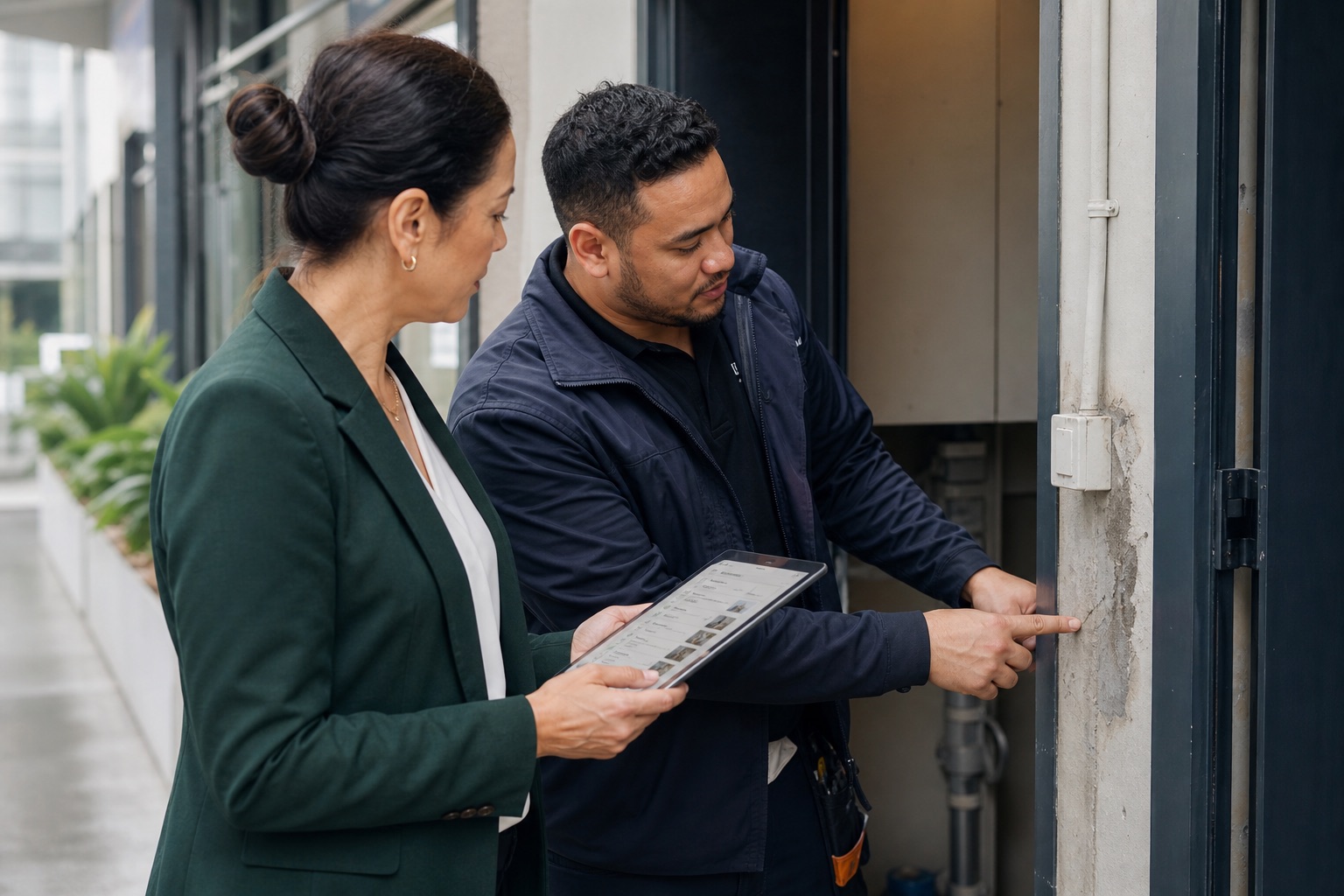
A new vertical crack was recorded beside the rear service-door frame at 10:20 am. The doorway remains operational and no loose material was observed. A building specialist will assess it by Thursday; the manager will update the tenant and owner after that inspection.
Close the loop in the portfolio record
The final inspection output should not live only in a PDF or an inbox. Link actions back to the relevant property record, preserve the original evidence and make completion visible to the team. A report is not complete merely because it was distributed; each material action needs a status that can be followed until resolved or consciously deferred.
When work is completed, record the date, outcome and supporting evidence. If the solution differs from the original recommendation, explain why. Confirm with the affected tenant where appropriate and carry unresolved or recurring issues into the next inspection plan. This creates organisational memory and helps the team recognise patterns instead of repeatedly rediscovering the same problem.
Use a simple review standard
Before closing the inspection, ask whether a colleague who was not present could locate the issue, understand its significance and take the next action without calling the inspector for basic clarification. Check that urgent items have been escalated, named owners and dates are present, images match the wording, and sensitive information is visible only to the appropriate audience.
That final two-minute review prevents hours of later reconstruction. More importantly, it produces a record that supports dependable maintenance, clearer owner reporting and more confident conversations with tenants. The value is not the quantity of notes captured—it is the number of observations converted into responsible, visible action.
Sources and context
Comrent Insights prioritises first-party sources and links directly to current context where it helps the reader verify or extend the work.